

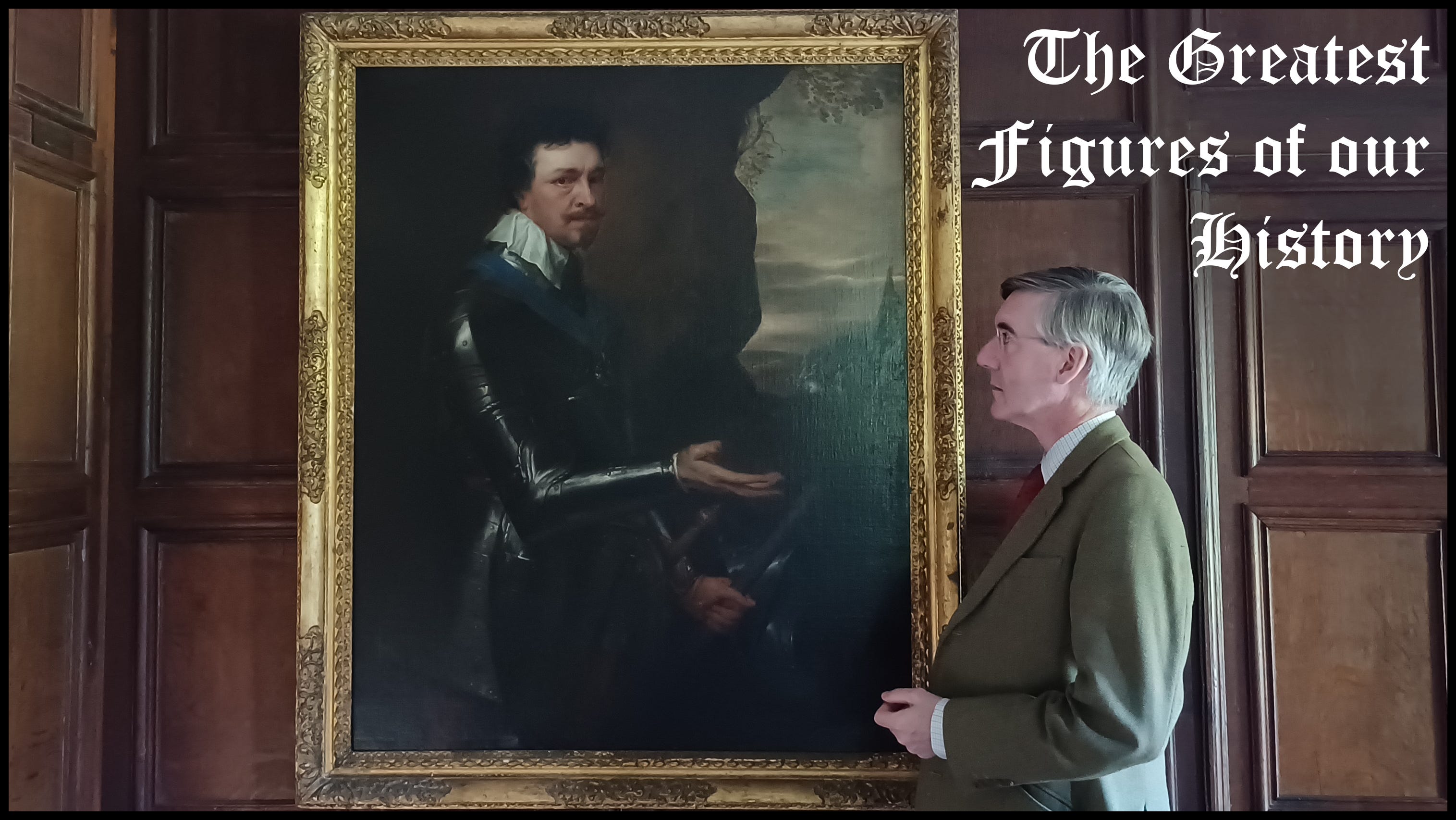
“I met murder on the way,
He had a face like Castlereagh.”
It was Castlereagh’s misfortune that two of England’s most famous poets, Shelley and Byron, both lived while he was the height of his political power. Both despised him, with the result that his reputation has been forever sullied. The fashionable bien pensants loathed him because he backed Austria over Italian nationalism, monarchies against Jacobins and they blamed him for the Peterloo Massacre (Castlereagh was foreign secretary so had no responsibility for Peterloo, but as Leader of the House he had to answer for it in Parliament).
All of the above was wholly unjustified, as he is one of the most important figures in British history, who achieved the essential forerunner of prosperity, that is to say, peace.
Robert Stewart was born on the 18th June, 1769, so the victory at Waterloo was perhaps the best birthday present he could possibly have received, when he reached the age of 46. He was an exact contemporary of Arthur Wellesley, later the Duke of Wellington, who was born a few weeks earlier in the same Irish city of Dublin.
He is usually known as Lord Castlereagh, a courtesy title he received when his father was advanced to the Earldom of Londonderry in 1796. However, he sat in the House of Commons for all of his political career, as by the time he inherited his peerage and left the Commons, his life was near its end.
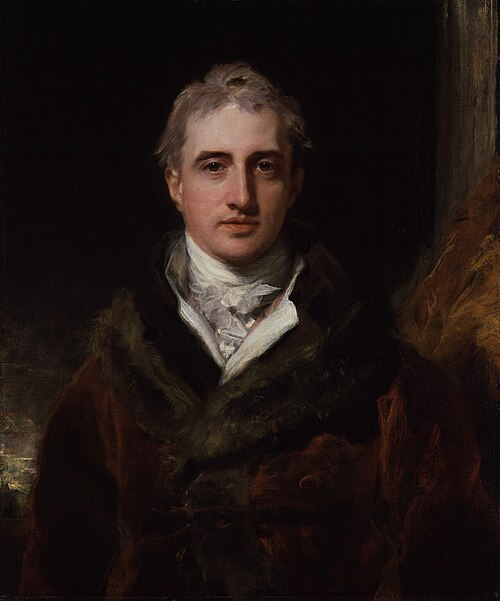
Castlereagh was an acolyte of Pitt the Younger, but not as close to him as George Canning, and the two were in competition for much of their careers. Famously, they fought a duel in 1809, the last instance of two cabinet ministers taking to the duelling field against each other. At 217 years distance, this seems all quite silly, but at the time it was literally a matter of life and death, only five years after Alexander Hamilton had been killed in a duel by the then vice president of the United States, Aaron Burr.
The matter of honour arose because Canning had been conspiring to force Castlereagh out of office and was caught in the act. He wrote to Canning, accusing him of being “in breach of every Principle, of good Faith, both public and private”. Both fired two shots in the duel and Canning was hit in the leg by Castlereagh’s second bullet, which satisfied him as the offended party.
This damaged both their reputations, and that of the government, but not permanently. Castlereagh came back into office in 1812 as Foreign Secretary, the role that defined him. He was also Leader of the House of Commons, which in those days, if the Prime Minister was in the Lords, meant he was in charge of the government’s Commons business, and was effectively the party leader in the Commons.


