

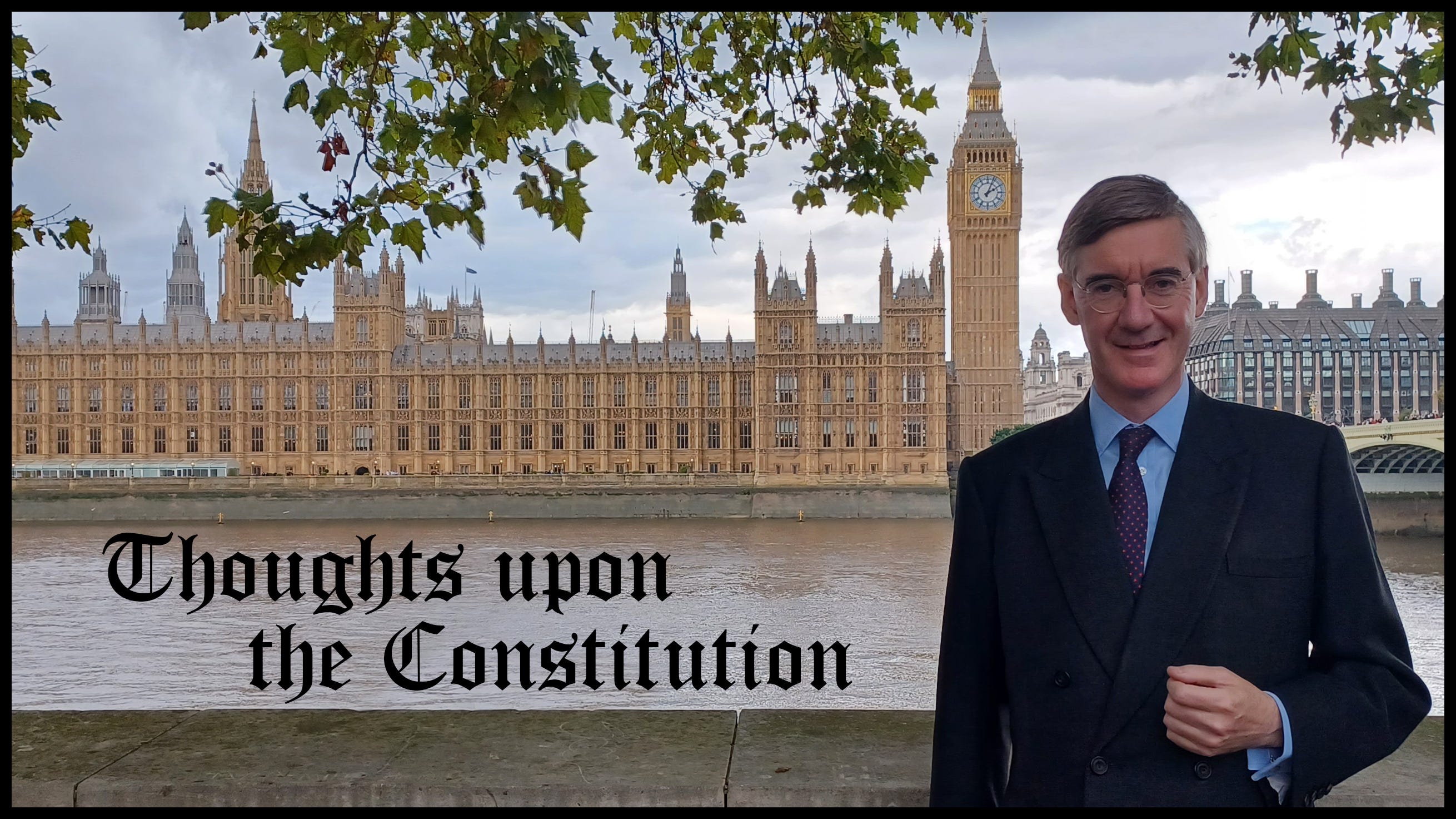
In recent decades, and especially since the Iraq War, there has been much debate over who, in the British Constitution, ought to have authority over decisions of war and peace.
In America, it is at least, in theory, simple and covered in the Constitution. The President is the Commander-in-Chief (a post held by the Sovereign in the UK following early 20th century reforms), and has all the rights that go with that office. However, a formal declaration of war requires Congressional instigation. Both houses on a simple majority in each house may send a declaration of war to the President, who may then either agree or veto it.
This has not happened since the Second World War, and has been replaced by the Authorisation for Use of Military Force, or simply unilateral Presidential action. Thus a clear constitutional separation of powers to avoid independent action has, in modern times, been inoperative.
However, the United Kingdom does not have a codified constitution, so there is no clear dividing line between the executive and the legislature. The separation of powers is not a British constitutional doctrine, and war has been more a matter of convention than a strict constitutional discipline. Nonetheless, it has an important place in our constitutional history.
The early Parliaments were often instigated by war. The reason the king summoned a mediaeval Parliament was frequently because he needed money to fight a war that had already started. Initially, a king tended to hope he could afford to go into battle on the back of his own revenues plus loans, but often found that the length of the war exceeded his ability to finance it.
By the later mediaeval period, kings were more likely to recognise this and summon Parliament before engaging in war, which inevitably gave the House of Commons an element of control over policy, via supply.
The Kings did this because taxation agreed by the Commons, as the representatives of the community, raised more money than arbitrary demands. In other words, they did not call the Commons because they were proto-democrats, but because the support of the political nation made fundraising easier.


