

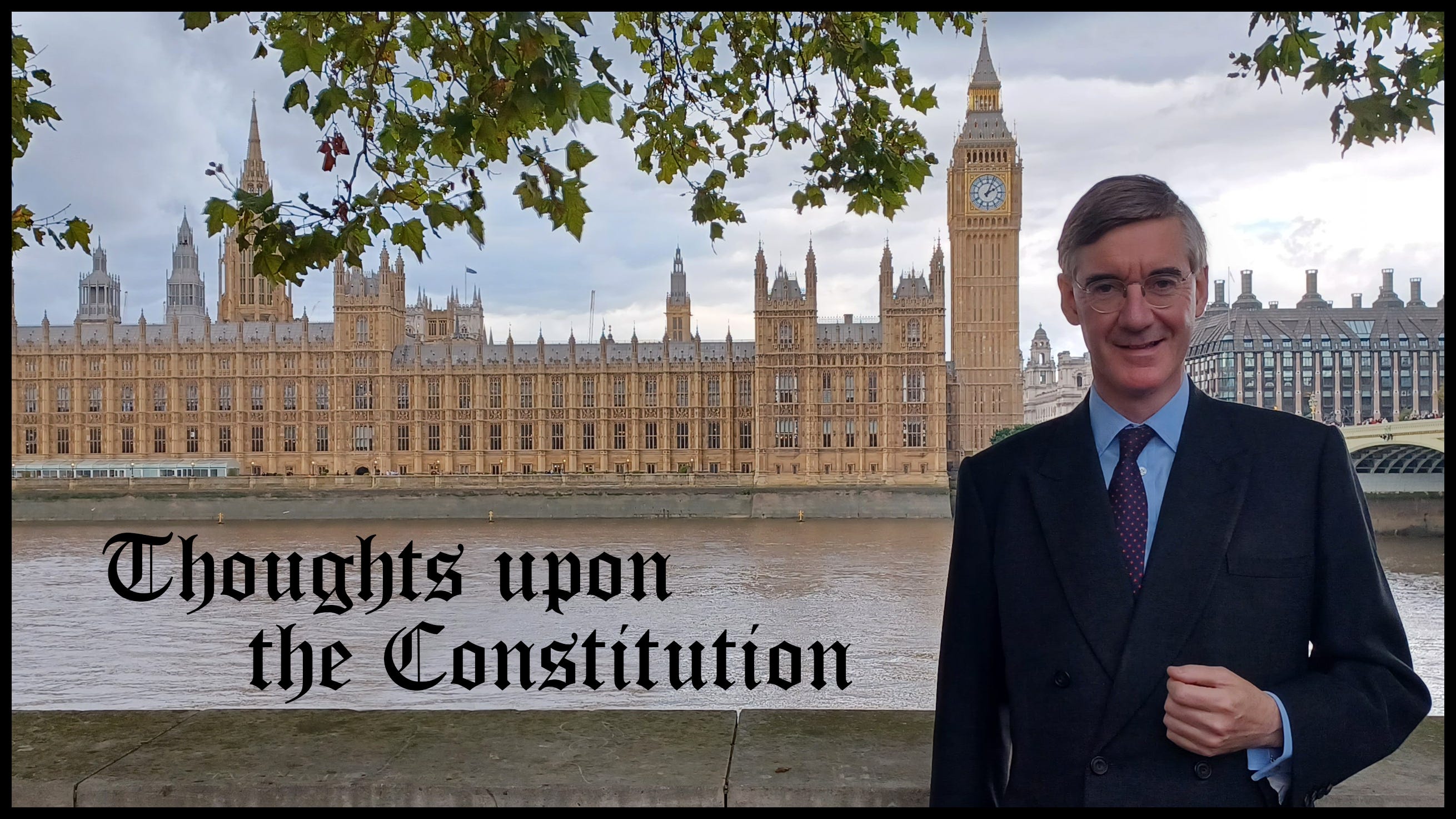
On the 250th anniversary of the United States, I thought it might be interesting to compare its Constitution with our own. In many ways, the American Constitution is an attempt to perfect and purify the British one. It is an enlightenment experiment in the perfectibility of rational beings, as opposed to the untidy reality of an old Constitution.
The framers of the American Constitution were heavily influenced by Montesquieu’s theory of the separation of powers. He had been concerned that liberty was at risk whenever the executive, legislature and judiciary were in the hands of the same people. Hence, this was prohibited by the new Constitution.
Interestingly, Montesquieu thought he was describing the British Constitution, but he clearly was not. However, his understanding encouraged the Founding Fathers, many of whom believed themselves to be English gentlemen who were being treated badly by the Crown, and needed to re-establish their rights.
What this meant in practice was that in America the various arms of government are entirely separate. Government ministers do not sit in Congress, with the exception of the Vice President, who has a casting vote in the Senate, and any congressman who becomes a minister has to resign his seat. The judiciary is again separate, and although subject to confirmation hearings in the Senate, as are ministers, they do not sit or engage with Congress.
As the American Constitution is codified, the ultimate arbiter of it is the US Supreme Court. The Founding Fathers were nervous of democracy, so made changing the Constitution difficult, so that in most cases the judges’ verdicts are final and can overrule the democratic part of the system. This has made the judiciary highly political, and appointments to it are made by presidents on the basis of party affiliation. This has had the effect of making the Supreme Court extremely powerful, but it does not always follow the desires of its own political side.
The recent case on birth citizenship is an example of a case that went against the president, in spite of the Republican majority on the Supreme Court. This is particularly interesting, as the 14th Amendment of the Constitution, which gives birthright citizenship, was a post-Civil War change that gave citizenship to black Americans, which they had been denied by the Dred Scott judgment of the Supreme Court in 18571.


