

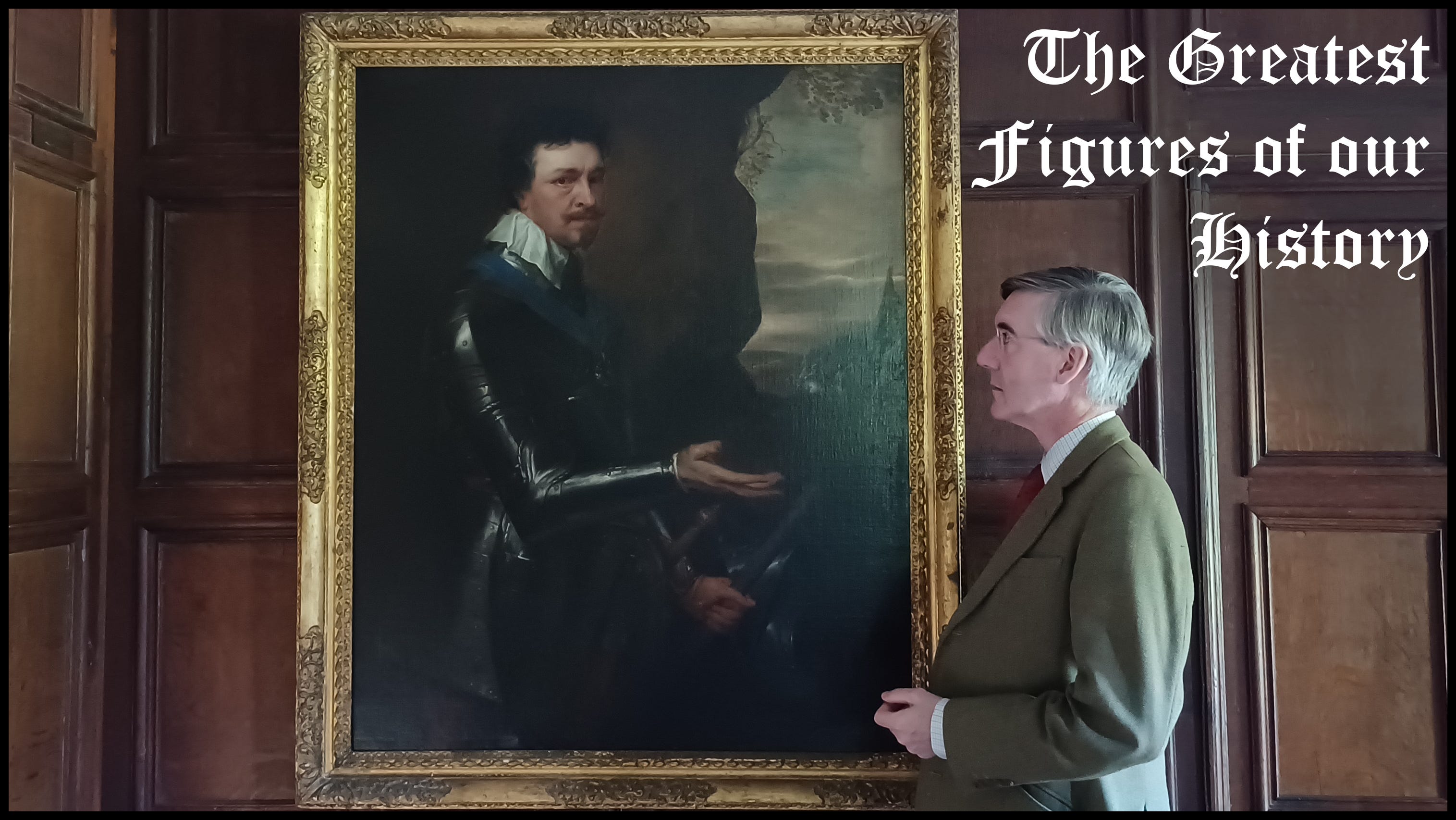
John Locke’s importance is not in what he did, but in what he thought and the consequences of what he wrote. His traditional biography is simple. He held no great offices of state, merely some minor ones, but his influence is still felt today.
Locke was born on 29th August 1632 in the village of Wrington in Somerset. He was baptised by Dr. Samuel Crooke, the rector of Wrington, on the day he was born. Crooke was a Puritan, and of interest to me because Veronica Crook, nanny to the Rees-Mogg family now for over 60 years, is his direct descendant. Both John Locke and I have been held in the arms of members of the Crook family as infants.
Locke’s parents, another John and his mother, Agnes, lived near Wrington in a hamlet called Belluton, just outside Pensford. Locke Senior supported the parliamentary cause in the Civil War, along with his neighbour, Alexander Popham, who owned the great local estate.
Although the Civil War effectively ruined the family fortune, the connexion with Popham was absolutely essential for the young Locke. Alexander Popham, as a Member of Parliament, had the right to propose a boy for Westminster School. He used this in favour of Locke, who in due time became a King’s Scholar, even though there was no King at that point, and from there gained entry to Christ Church, Oxford. This lucky chance was the one way in which Locke was able to achieve the education he needed to become influential.
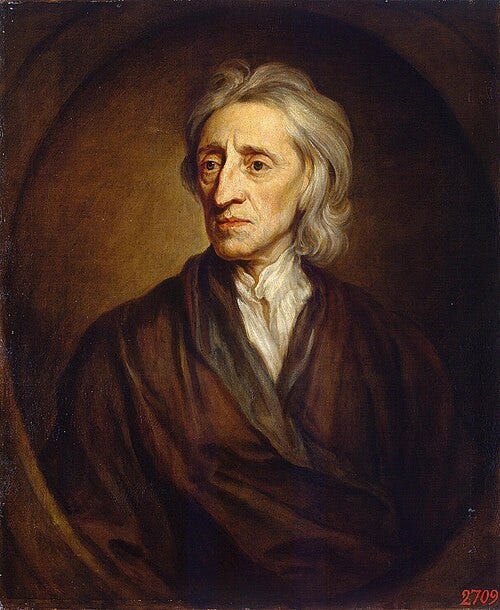
After his education, the next most important aspect of Locke’s ascent was his friendship with Anthony Ashley Cooper, 1st Baron Ashley and later Lord Shaftesbury. Their encounter, for which there are two competing stories, seems to have been an immediate meeting of minds. Locke was utterly charmed by Ashley, who thought Locke a genius.
Ashley tempted Locke out of academic Oxford life and in to London, where at the age of thirty-five he took up residence in Ashley’s household, and it was in this house that he wrote ‘An Essay Concerning Toleration’. Ashley broadened Locke’s acquaintanceship and range of interests beyond the narrow academic clerical life that Oxford had offered him, and brought him to some degree of political attention.


